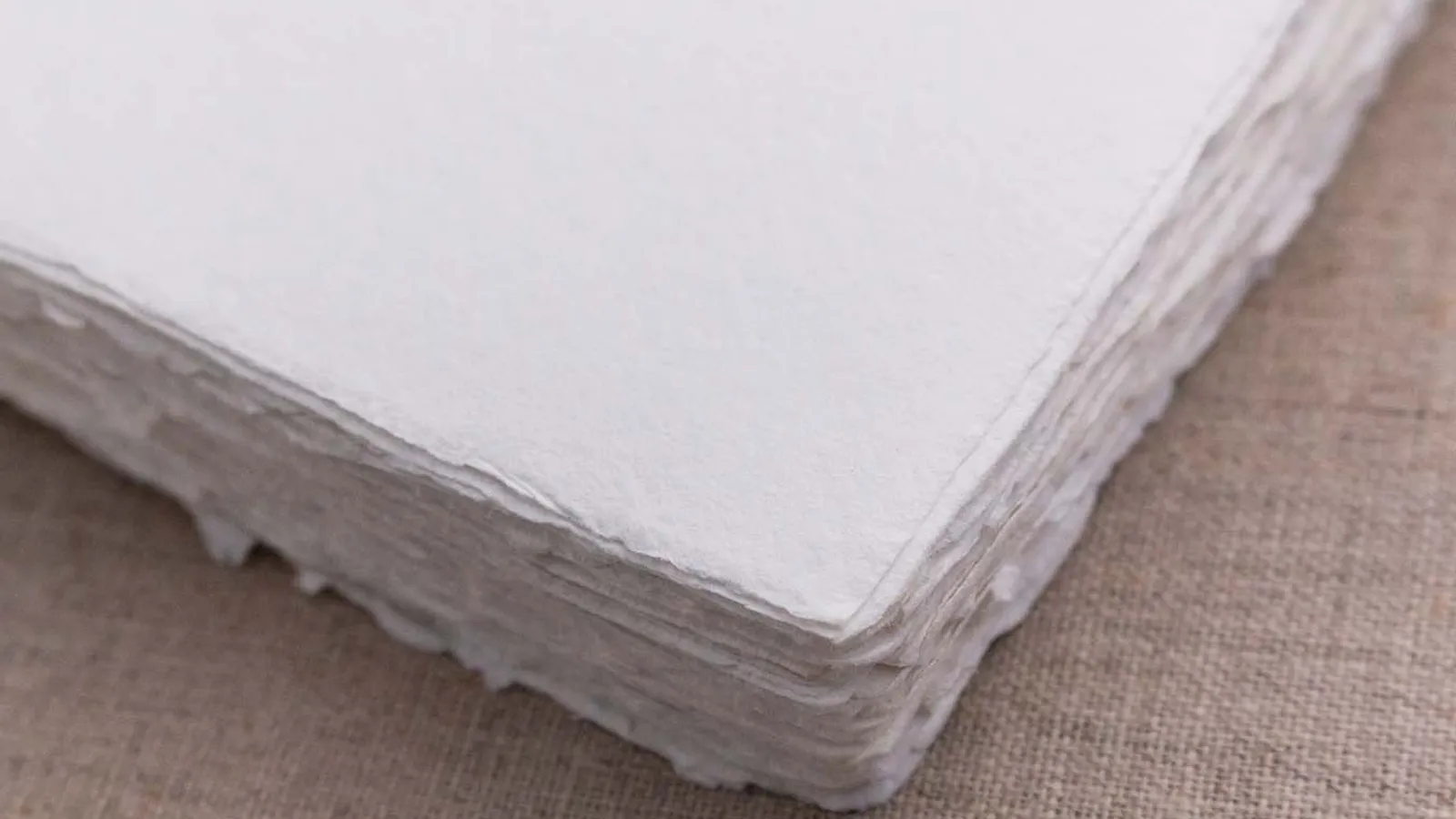
Sheets crafted one at a time from cotton and plant fibers — soft, deeply textured, and a beautiful surface for letterpress and foil stamping.
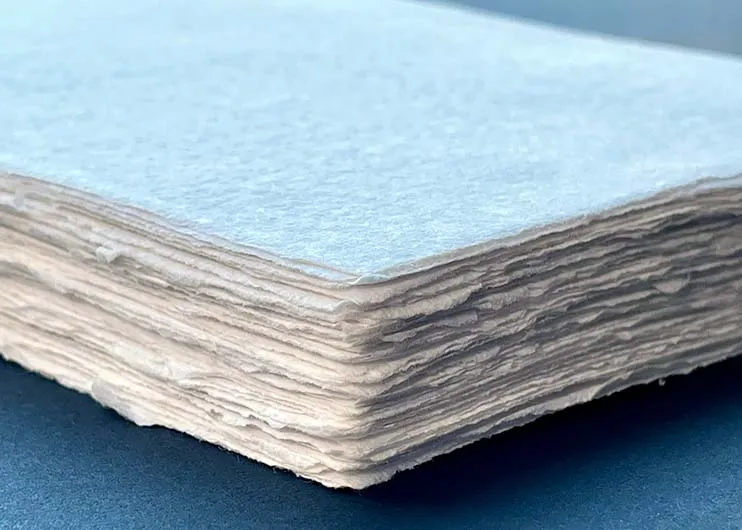
Papermaking is one of the oldest crafts still practiced today, and even in a world of high-speed mills there are artisans who lovingly make sheets one at a time. The papers they produce — typically pulled from cotton, abaca, or other plant fibers — are unlike anything that comes off an industrial line. Each sheet has its own character, its own deckled edge, and its own subtle variation in surface and color.
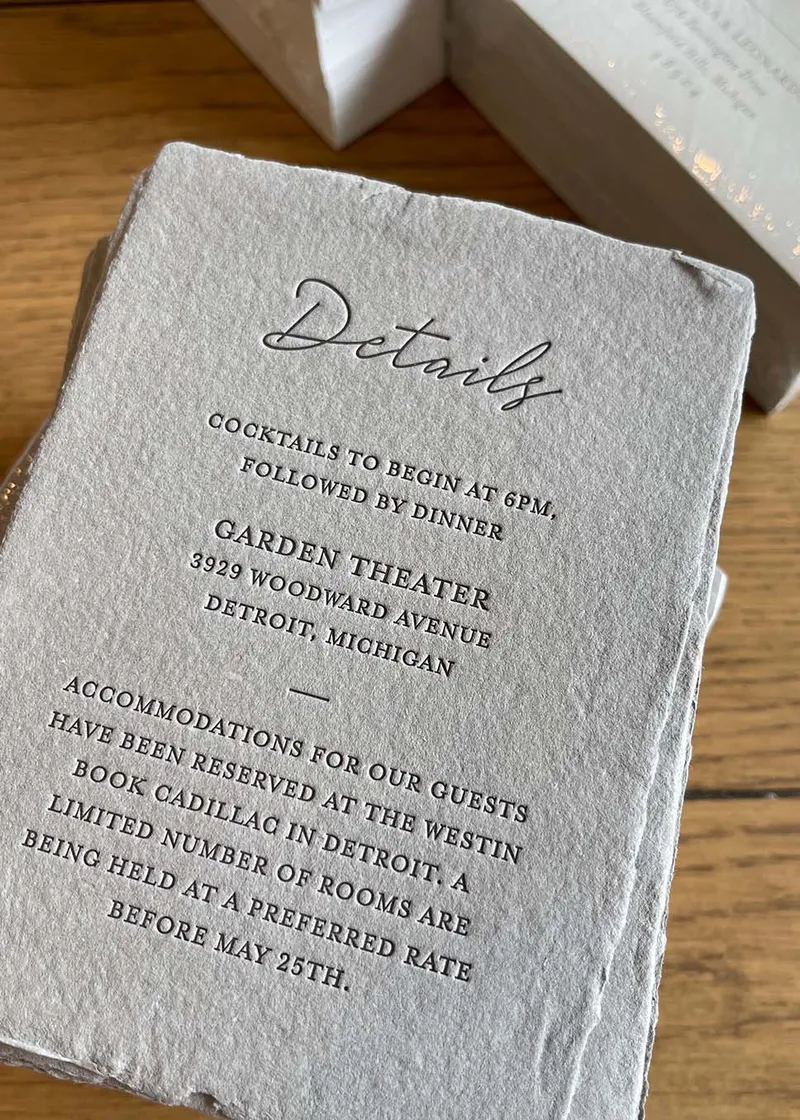
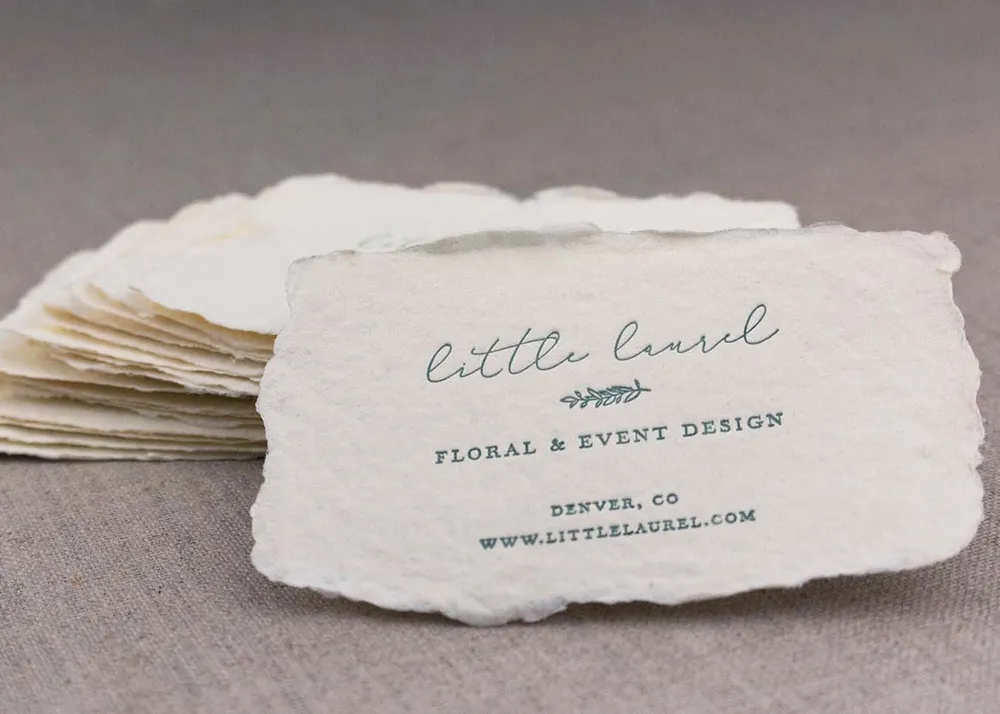
Most handmade papers take a deep impression beautifully, which makes them a natural fit for letterpress and foil stamping. They are traditional for romantic and earthy wedding invitations, but we love seeing them used in unexpected places — a one-of-a-kind business card, a hand-printed note card, a hang tag that feels substantial in the hand. The texture does a lot of the design work for you.
A wedding invitation letterpress printed on gray handmade paper.
What to expect on press
Because each sheet is shaped by hand, no two are exactly alike. Sizes vary, edges are irregular, and the surface texture shifts subtly across the run. We work with this rather than fighting it — but it does mean you should expect some natural variance in where your design lands on the page, and a design with heavy ink coverage may read a little differently from print to print.
Designs that have a lot of breathing room around them tend to look most at home on handmade paper. The edges of the sheet are part of the composition, so we leave them alone. Handmade paper is not trimmed after printing.
Sourcing the paper
You're welcome to supply your own handmade paper, and most of our handmade-paper projects work this way. There are wonderful makers all over the world, and matching the right paper to the right project is part of the fun. A few we've worked with happily and recommend:
Sri Aurobindo — beautiful handmade cotton sheets in a wide color range, from a community in India.
Fabulous Fancy Pants — a small US maker producing colorful handmade paper with deckled edges.
Porridge Papers — a Nebraska studio making handmade and tree-free papers in many weights and finishes.
You can ship the paper to us yourself or have the supplier ship directly here to save on freight. We'll need a little extra — typically 30% over your final quantity — to cover press setup, makeready, and any sheets that come through with flaws. So a 100-piece run on 5×7 sheets means we'll ask for at least 130 sheets in hand before we start.
Letterpress business cards printed on handmade paper.
Preparing your artwork
Artwork should be vector — same as any other letterpress project — and your design should leave at least 3/4" of clear space along two adjacent edges to give the press something to grip. Because handmade sheets aren't trimmed after printing, that gripper area becomes part of the finished piece, so plan the layout with the full sheet in mind.
If your project calls for full color rather than a few flat ink colors, we can also digitally print on handmade paper — including white ink on darker sheets — though we hand-feed each sheet, so digital runs cap out around 250 pieces.
A note on envelopes
Handmade papers usually come in standard sizes (A7 at 5×7, A2 at 4.25×5.5, and so on), but the deckled edges and slight irregularity from sheet to sheet mean they don't always slip cleanly into off-the-shelf envelopes. Order a few sample sheets and try them in your envelope of choice before committing — sometimes you'll want to size up.
About supplied paper
We've never damaged a client's supplied paper in production, but we want to be straightforward about it: if it does happen, our liability is limited to the invoice amount of the project. The 30% overage above is our margin for the things that can go wrong, and it's almost always plenty.
Have a project in mind?
Tell us what you're working on and we'll talk through paper choices, sourcing, and how to get the best print out of the sheet you have your eye on.