Now booking Fall 2026 weddings. Read the timing guide
How We Print

White Ink Printing

Opaque white on dark and colored paper. Digital white ink produces clean, readable text and graphics on stocks where traditional ink disappears.

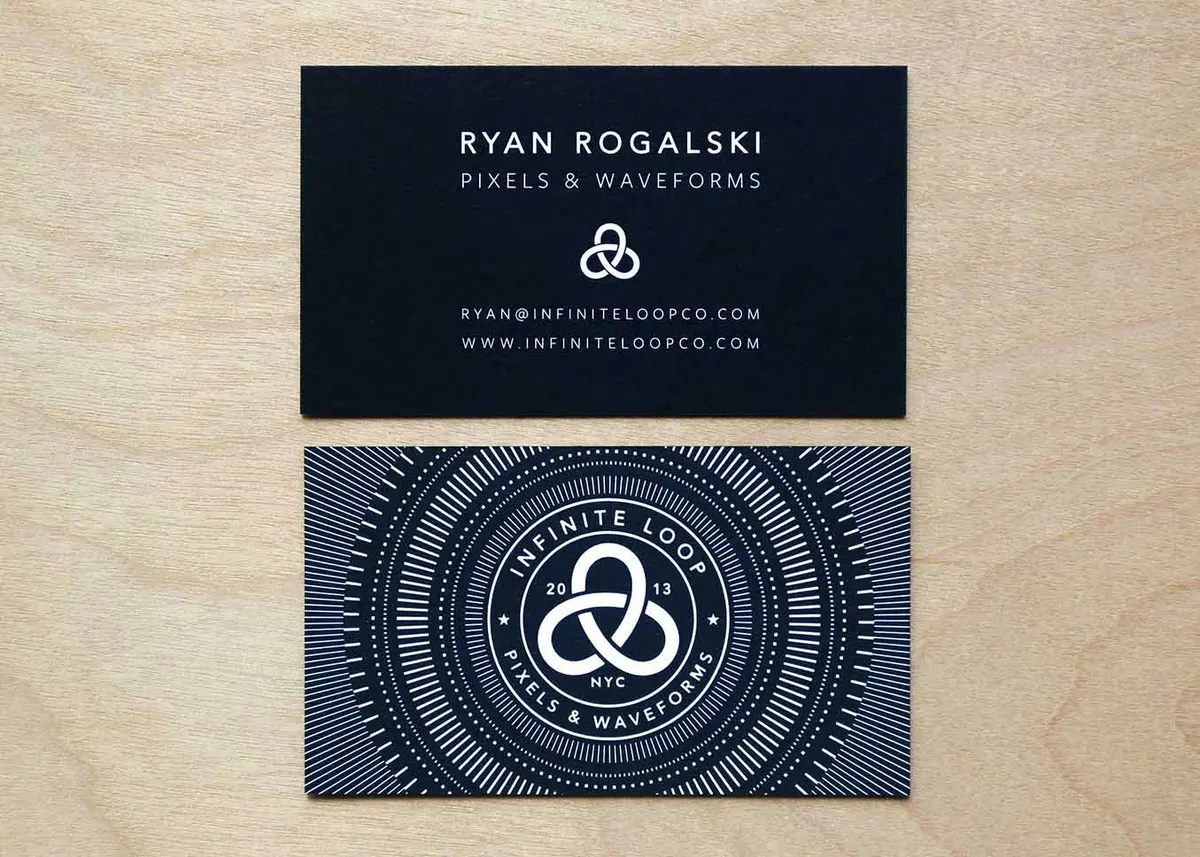
White foil stamped business cards on Classic Crest Epic Black paper
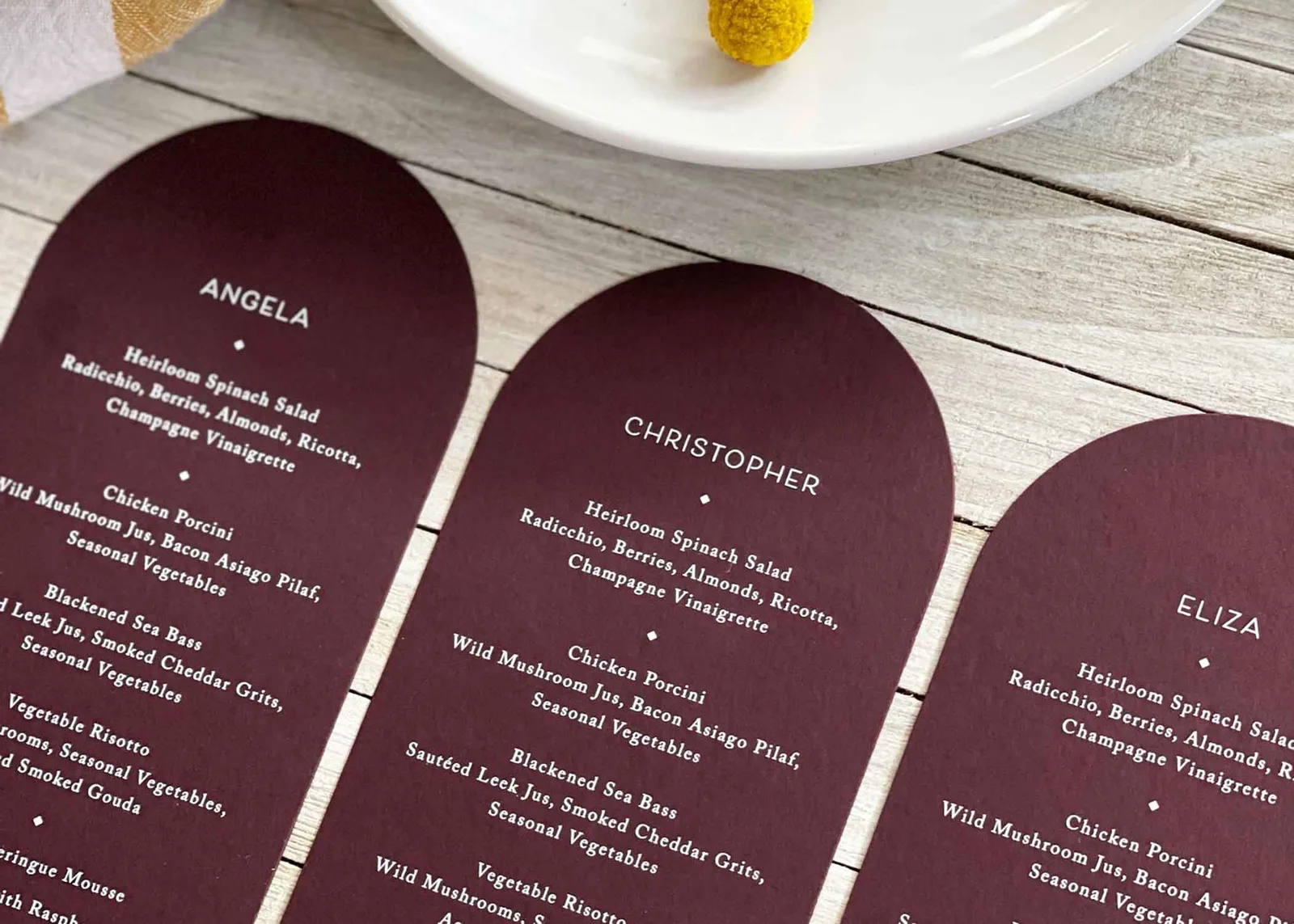
Digital white ink printing on a colored paper menu

What is white ink printing?

White ink printing uses an opaque digital white ink to print on dark or colored paper. Unlike letterpress ink, which is transparent and allows the paper color to show through, digital white ink is fully opaque and produces a clean white on any background.

It is the most cost-effective way to print white text, logos, and graphics on dark stocks like black, navy, charcoal, and kraft. No custom die is required — we print directly from your digital file.

White ink vs. white foil

Both produce opaque white on dark paper. The choice depends on the finish, the impression you want, and the quantity. White ink is flat and modern; white foil carries a tactile letterpress-like impression — lighter than an inked letterpress hit, but you can absolutely feel it with a fingertip.

White Ink White Foil
Finish Matte, flat Slight sheen, tactile
Opacity Fully opaque Fully opaque
Tooling No die required Custom copper die required
Best for Large text, full coverage, envelopes Fine detail, logos, premium stationery
Cost Lower per piece, no setup Higher per piece, one-time die cost
Impression Flat — no tactile impression Tactile — lighter than inked letterpress, but felt with a fingertip

Common uses for white ink

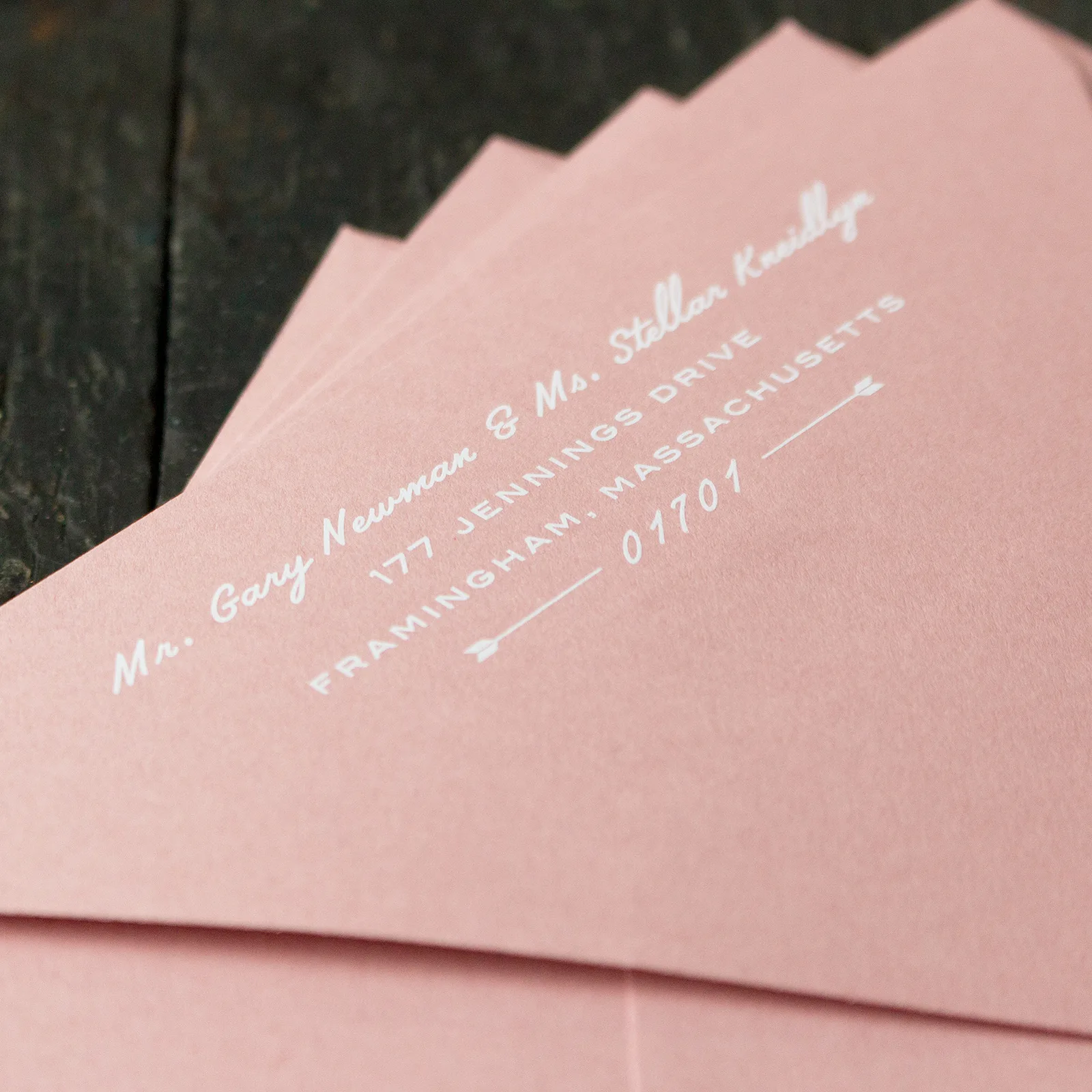
Envelope addressing is one of the most popular applications. White ink on dark envelopes — black, navy, forest green — produces clean, legible addresses that complement the stationery inside.

Return addresses, hang tags, packaging labels, and business cards on dark or kraft paper are all natural fits. White ink is also used as a base layer under CMYK on dark stocks, making full-color printing possible on papers that would otherwise absorb the color.

White ink digital printing on a colored envelope
White foil business cards spread across solid black stock

White foil — when you want the impression

White foil stamping is the other path to opaque white on dark paper, and it's the choice when you want the piece to feel as good as it looks. Because the foil is applied with a heated copper die under pressure, it leaves a tactile impression in the paper — lighter than an inked letterpress hit, but unmistakably there.

The cards above were stamped with white foil on Classic Crest Epic Black for Infinite Loop. See the project in detail on our work page.

White foil makes the most sense for premium business cards, wedding invitations, and pieces where the tactile quality justifies the per-piece cost and the one-time die. For envelopes, large coverage areas, or variable text like guest addressing, white ink is almost always the right call.

White foil holds fine detail

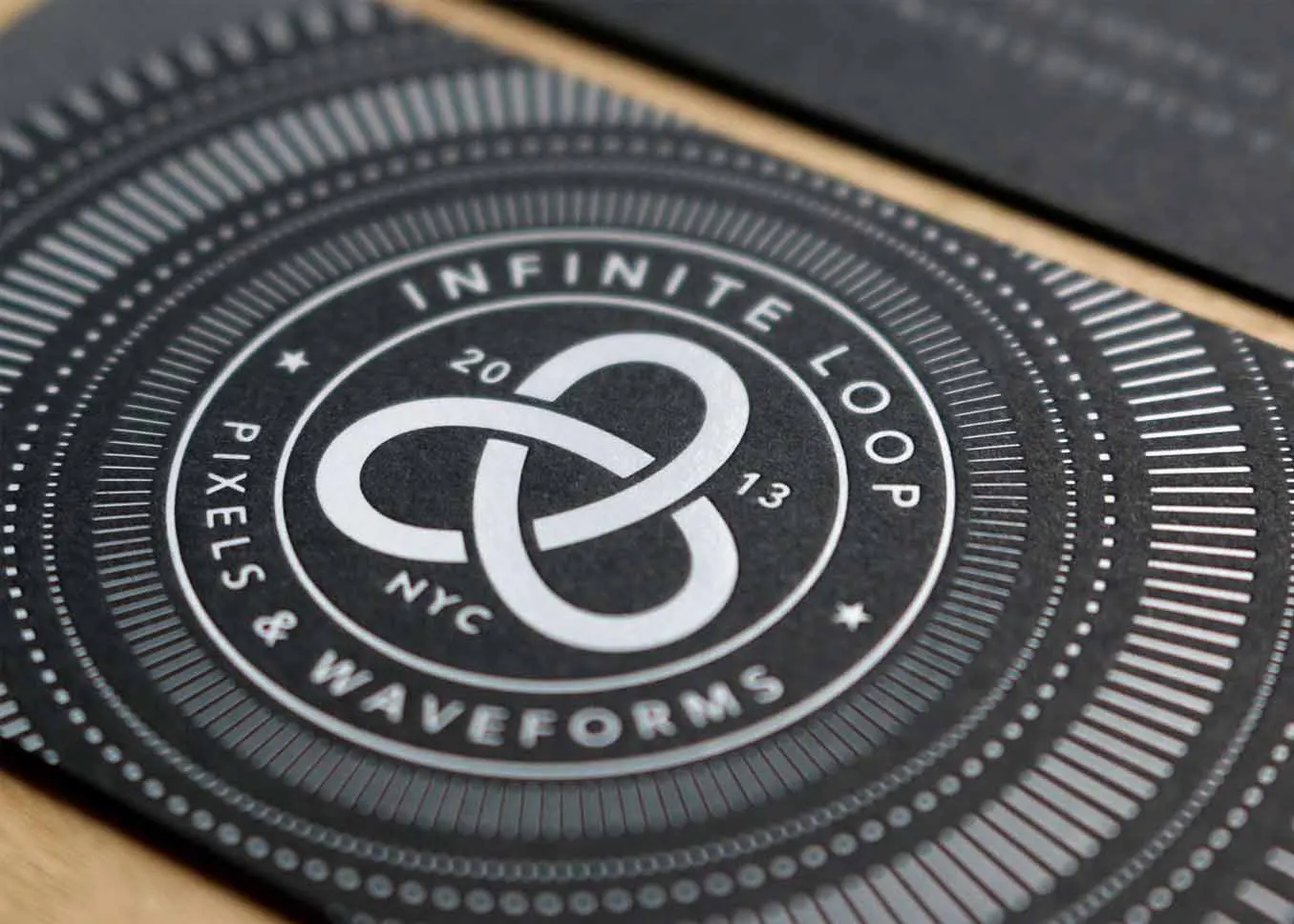
The copper die is engraved at the same resolution as a letterpress plate, so white foil holds typographic detail and pattern work that a digital ink layer can't quite match. Hairlines stay crisp. Small caps stay readable. Geometric patterns repeat cleanly across a sheet.

If your design depends on the precision of the white element, foil is usually the better answer — even if you give up some flexibility on coverage and per-piece cost.

Close-up of white foil geometric pattern showing crisp lines and tactile impression

White Ink Questions

Can white ink be combined with letterpress?

Yes. Digital white ink and letterpress are frequently combined on the same piece. The white ink is printed first — typically for text or graphics that need to be opaque — and then the piece goes through the letterpress for a debossed impression, foil, or a second ink color.

Why not just use letterpress white ink?

Letterpress ink is transparent. White letterpress ink on dark paper will not produce a clean, opaque result — the dark paper shows through, producing a faded or grayish appearance. Digital white ink solves this because it is formulated to be fully opaque.

What paper works best for white ink?

Any dark or colored paper works. Smooth stocks produce the sharpest detail. Textured papers like kraft still work well, but very fine text may soften slightly on rougher surfaces. We test and adjust settings for each paper to ensure the best result.

Is white ink durable?

Yes. Digital white ink is cured during printing and is resistant to smudging and handling. It holds up well on business cards, hang tags, and other pieces that see regular contact. It will not flake or peel under normal use.

Ready to print white?

Tell us about your project and we will recommend the best approach — white ink, white foil, or a combination.

Or call us at 1 (800) 213-6408